

Clarify The Offer
Visitors should quickly understand what the business does, who it serves, where it works, what problem it solves, and what action to take next.
Atlanta, Georgia, USA
Organic Lead Generation Guide
You can improve website leads without paid ads by strengthening the pages visitors already use: clarify the offer, match search intent, improve service pages, add trust signals, simplify calls to action, fix contact-form friction, and track the actions that show real buyer interest.
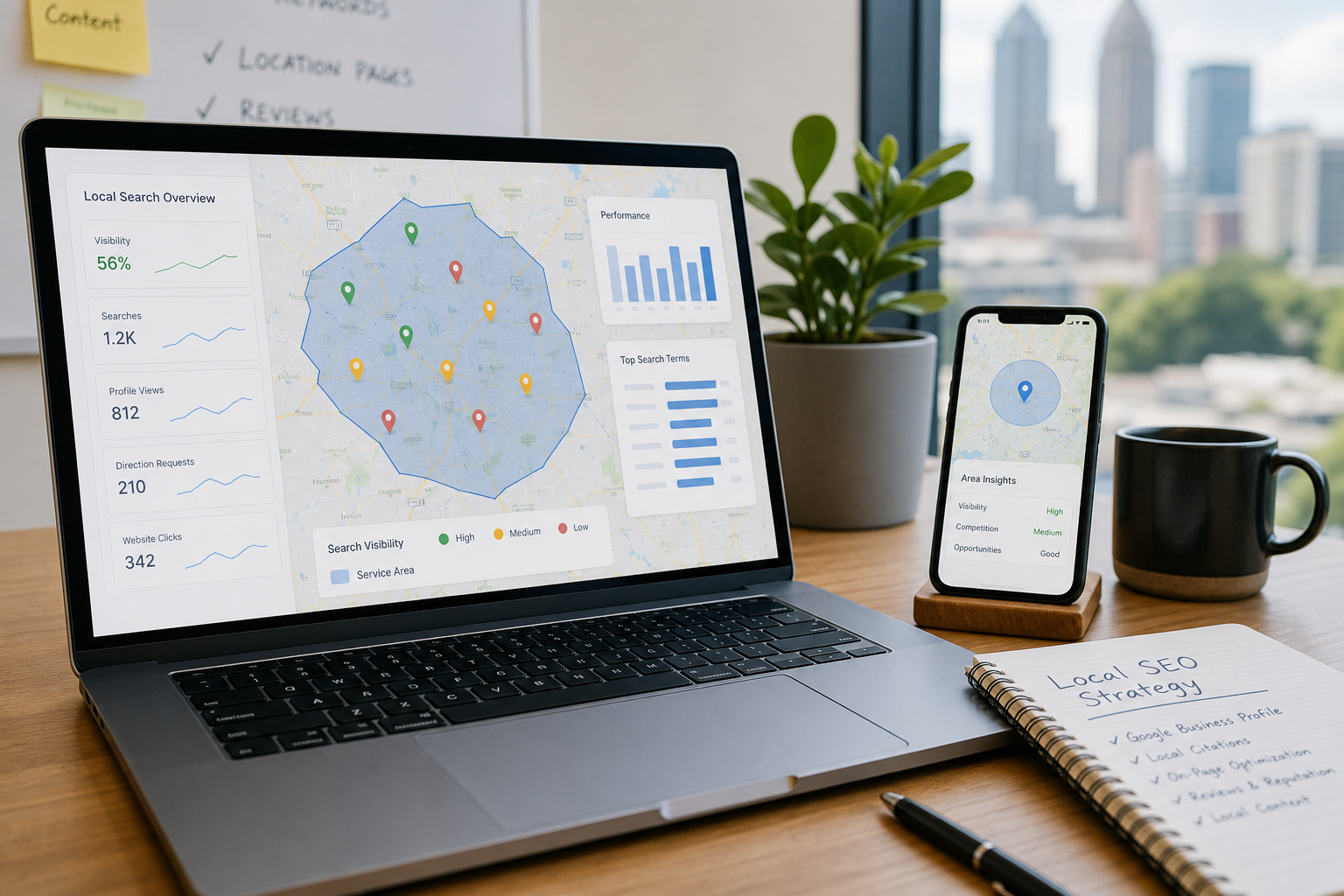
Paid ads can help when the website is ready, but many businesses should first fix the organic lead path. A clearer page, stronger offer, better proof, and easier contact process can improve the value of every traffic source.
Visitors should quickly understand what the business does, who it serves, where it works, what problem it solves, and what action to take next.
High-intent service pages should explain fit, problems solved, what is included, process, FAQs, proof, and related services.
Answer-ready headings, helpful FAQs, internal links, schema, local context, and entity-rich explanations help search engines and AI systems understand the business.
Use real project examples, process details, reviews when available, policies, contact clarity, and proof sections that do not rely on unsupported claims.
A contact-form-first path should tell visitors what to submit and why, while keeping buttons visible, specific, and easy to use on mobile.
CTA clicks, form starts, form submissions, service intent, and top landing pages should be measured before scaling content or ad spend.
This approach fits businesses that want more qualified inquiries but prefer to improve their website, search visibility, and lead path before increasing paid advertising.
Organic lead generation works when the website attracts the right visitors and gives them enough clarity, trust, and direction to contact the business.
Start with the pages closest to revenue: homepage, service pages, location pages, case studies, contact page, and buyer-intent articles. These pages should explain the offer clearly and guide visitors toward one practical next step.
Then build supporting content around real buyer problems, such as traffic without leads, SEO vs Google Ads, website redesign vs optimization, WordPress vs Shopify, slow websites, and low-converting Shopify stores.
Add who-it-is-for sections, problems solved, deliverables, FAQs, internal links, and service-specific CTAs.
Tell visitors what to include, keep the form path consistent, and remove competing contact distractions that reduce request quality.
Add safe proof blocks now, collect verified case studies over time, and measure CTA clicks and form submissions by page and service intent.
Yes. A website can generate leads without paid ads when it has strong SEO, clear service pages, useful content, trust signals, local relevance, focused calls to action, and an easy contact path.
Fix service-page clarity, landing page messaging, CTA placement, contact-form friction, tracking, trust signals, mobile layout, and SEO basics before increasing paid traffic.
Start with the homepage, main service pages, local pages, contact page, proof or case-study pages, and problem-aware articles that can link visitors toward a relevant service.
Some conversion improvements can help quickly, while SEO and content visibility usually take longer. The timeline depends on website quality, competition, search demand, content depth, and tracking accuracy.
Google Ads can be useful after the website has clear landing pages, tracking, and conversion paths. Improving the website first can make paid traffic easier to measure and less wasteful.
Include your website URL, target services, target location, current lead problem, best-performing pages if known, and whether you need SEO, content, contact-form, WordPress, Shopify, or tracking help.
GHL Technology can review your website, service pages, organic content, CTAs, tracking, and contact path to identify the highest-impact lead-generation improvements before paid advertising.
Start with the GHL Technology contact form and include your website URL, target service, target location, current lead problem, and whether you want help with SEO, content, WordPress, Shopify, or digital marketing.