
Voice AI Decision Guide
AI Voice Agents for Appointment Intake: When Do They Make Sense?
A voice agent can help a business handle routine call intake, but it should not become a barrier between customers and a person when the situation is urgent, complex, or sensitive.
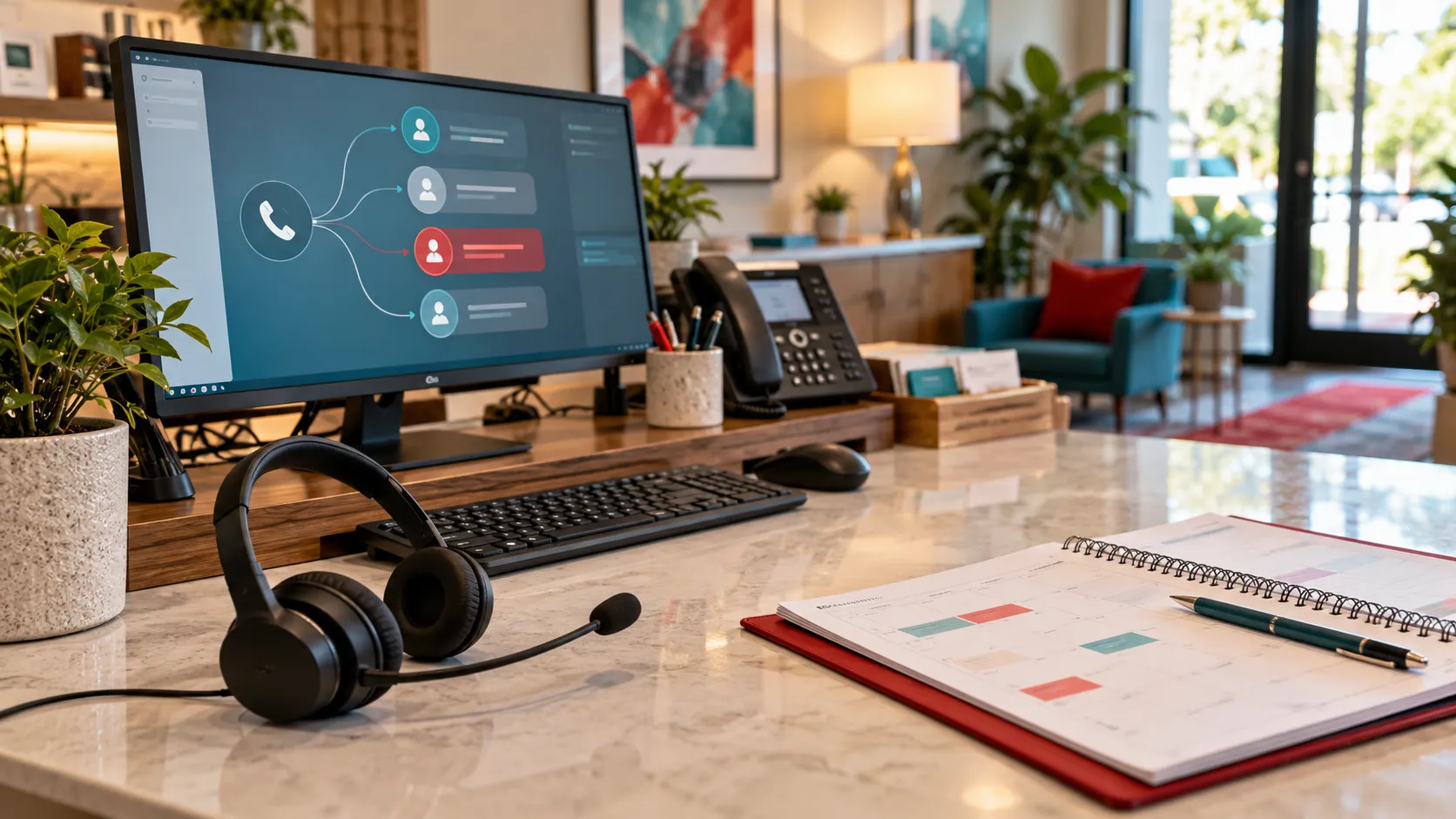
Repeatable intake with clear booking rules.
A caller must be able to reach a person.
Look at valid appointments and resolved calls.
Short Answer
Use Voice AI For Bounded Intake, Not Unlimited Advice
An AI voice agent may be worth testing when a business receives repeated calls asking for hours, service availability, appointment options, or the right team member. It can ask a few qualifying questions, check approved scheduling rules, and pass a summary to staff. It should state that it is automated and provide a simple human handoff.
A poor fit is a call that requires professional judgment, a complex quote, an urgent safety response, or an emotionally sensitive conversation. In those cases, the first job is to route promptly to a trained person.
Good And Poor First Use Cases
| Call type | Potential voice-agent role | Human role |
|---|---|---|
| Basic appointment inquiry | Collect service, location, preferred time | Confirm availability and exceptions |
| Routine status question | Read approved status if identity and permissions allow | Resolve discrepancies |
| Urgent or sensitive issue | Recognize and route immediately | Handle the conversation |
| Complex sales call | Capture concise context | Discuss scope and pricing |
Design The Call Flow Before Building It
- Identify the caller's most common reasons for calling from actual call records.
- Open with a clear automated-identity statement and an easy human option.
- Ask only the details needed to route or book the request.
- Repeat important dates, times, and contact details for confirmation.
- Define the scheduling system of record and prevent double booking.
- Transfer with a useful summary, without forcing the caller to start again.
- Provide fallback when speech recognition, the calendar, or the phone connection fails.
Controls
Plan For Consent, Accessibility, And Failed Calls
Call recording, transcript retention, outreach, and automated calling rules vary by jurisdiction and use case. Have counsel review the proposed workflow before launch. Do not treat a generic script as legal clearance. Limit the data stored and restrict access to recordings and transcripts.
Test noisy environments, accents, interruptions, silence, and callers who do not want to speak with automation. A human transfer or alternate contact method should remain available. Google Cloud's voice-agent guidance also emphasizes smooth escalation to human agents.
Measure Completed Customer Tasks
Do not use answer rate alone. A call that was picked up but misunderstood is not a successful interaction.
Valid Appointments
Track booked appointments that match the service, location, and available slot, then confirm attendance.
Useful Handoffs
Review whether staff received the right context and whether callers had to repeat themselves.
Failure And Opt-Out
Record misrecognitions, abandoned calls, escalations, and requests for a human. Use the pattern to revise the flow.
Sources And Further Reading
Next Step
Could Voice Intake Help Your Team?
Share your call types, current phone workflow, booking rules, and escalation needs. GHL Technology can help assess whether voice AI is appropriate.
Frequently Asked Questions
Questions Business Owners Ask
Can an AI voice agent book appointments?
It can be connected to a scheduling system and follow approved booking rules, but the flow must confirm details, handle exceptions, and prevent duplicate bookings.
Should callers know they are speaking with AI?
Yes. State clearly that the system is automated and make human assistance easy to reach. Review applicable legal and consent requirements before launch.
What happens when a voice agent cannot answer?
It should transfer the call or capture a request for a person with context, rather than repeatedly guessing or ending the call without a next step.