
Shopify Conversion Guide
Shopify Product Page Conversion Checklist For Growing Stores
A product page should help a shopper decide whether an item fits their needs and what happens after purchase. This checklist focuses on the decisions that usually cause hesitation, not decorative tweaks.
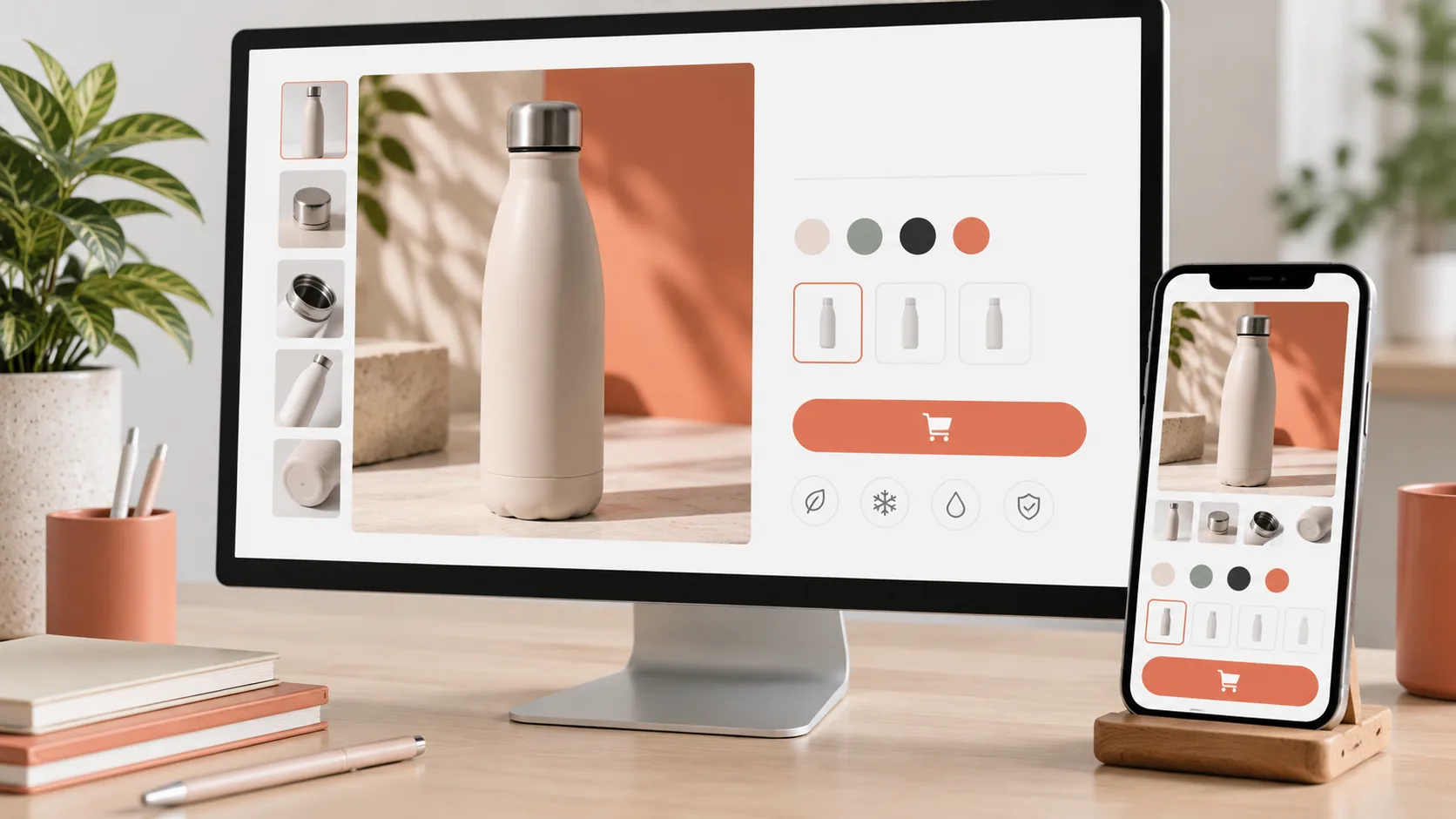
Shoppers need product, price, availability, options, and next action quickly.
Shipping, returns, sizing, and compatibility should not be hidden.
Evaluate purchase outcomes and margin, not button-click rate alone.
Short Answer
A Good Product Page Answers Fit, Cost, Trust, And Delivery
A Shopify product page converts when the buyer can see what the product is, choose the right variant, understand price and availability, judge quality, see delivery and return terms, and complete the intended purchase or inquiry. Improving a page means removing uncertainty from that sequence.
The right design depends on the product. A configurable cabinet, made-to-order print, and repeat-purchase accessory need different specifications and decision support. Start from actual customer questions rather than a generic template.
Make The First Screen Do Real Work
At desktop and mobile sizes, the page should make the next buying decision possible without a long search.
Product Identity
Use a clear title, primary image, price or pricing method, available options, and stock or lead-time status.
Action Clarity
The purchase or quote action should match the product. Avoid a generic button when shoppers need a configuration or sizing step first.
Confidence Cues
Place shipping, returns, warranty, material, or compatibility information near the decision; show reviews only when genuine and relevant.
Map Buyer Questions To Page Elements
| Buyer question | Page answer | Common failure |
|---|---|---|
| Will it fit? | Dimensions, compatibility, size guide, options | Generic copy or hidden specifications |
| What will it cost? | Price, options, delivery costs, tax context | Surprise charges at checkout |
| Can I trust the quality? | Detailed images, material data, authentic reviews, policies | Stock imagery and vague claims |
| When will it arrive? | Availability, production time, shipping estimate | No lead-time explanation |
| What if it is wrong? | Return and support terms with clear links | Policies buried in the footer |
Shopify Product Page Checklist
- Use product-specific images that show scale, detail, and use; avoid duplicate stock visuals.
- Name variants in language shoppers understand and update image, price, and stock consistently.
- Write a concise summary before technical specifications, then provide detail for serious buyers.
- Show real shipping, lead-time, return, warranty, and support information before checkout.
- Keep the main purchase or quote action visible and understandable on small screens.
- Test keyboard use, color contrast, image alt text, and meaningful validation errors.
- Check structured product data against the actual visible offer and availability.
- Measure add-to-cart, checkout start, purchase, and qualified quote requests by product.
Testing
Measure The Whole Purchase Path
A better product page should improve qualified add-to-cart behavior, checkout progression, completed orders, or useful quote requests. Watch for hidden tradeoffs: a more prominent CTA may increase clicks but also cause more checkout abandonment if options and shipping remain unclear.
Prioritize one friction point at a time. For example, add a sizing guide to a high-traffic product with frequent fit questions, then compare product-level inquiries, returns, and purchase behavior after enough data accumulates.
Sources And Further Reading
Next Step
Is Your Store Getting Traffic But Losing Buyers?
GHL Technology can review product-page clarity, mobile purchase flow, variant handling, page speed, SEO, and conversion measurement.
Frequently Asked Questions
Questions Business Owners Ask
What matters most on a Shopify product page?
Shoppers need a clear product, accurate price and options, useful images, delivery and return information, and a purchase action that works on mobile.
Should every Shopify product page use the same layout?
A shared layout helps consistency, but specifications, comparison help, configuration, and quote paths should reflect how each product category is bought.
Do product reviews improve conversions?
Authentic reviews can reduce uncertainty, especially when they address fit and quality. They should be genuine, current, and presented without implying unsupported results.